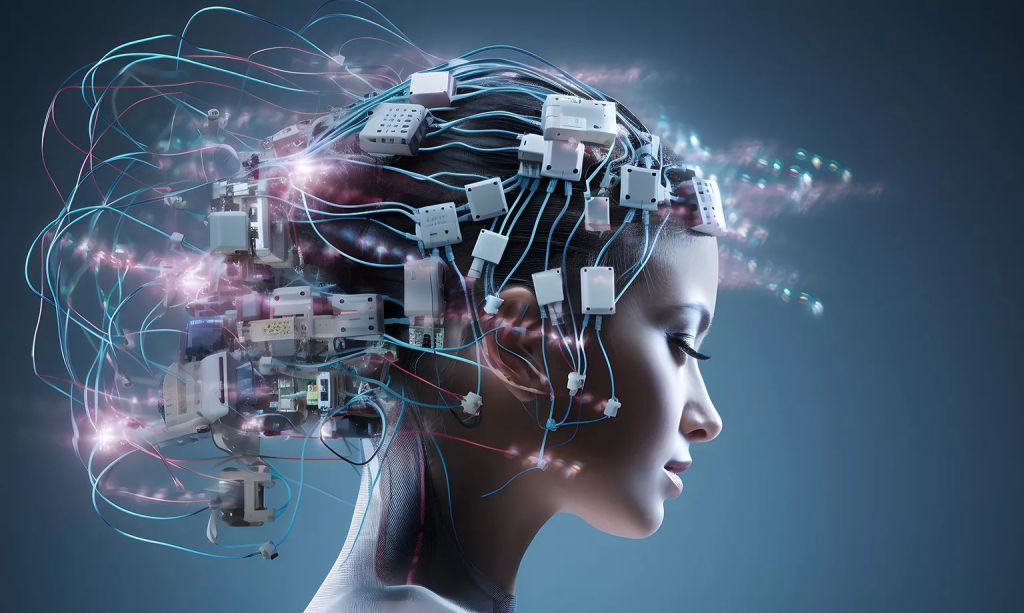
The concept of directly interfacing the human brain with computers has fascinated scientists for decades. Recent advancements in Brain-Computer Interface (BCI) technology are pushing the boundaries of what was once considered science fiction, transforming fields as diverse as healthcare, communication, and human augmentation. This article explores the latest breakthroughs, challenges, and future potential of BCIs.
What are Brain-Computer Interfaces?
Brain-Computer Interfaces (BCIs) are systems that establish a direct communication pathway between the brain and an external device. BCIs decode neural activity, often captured through electroencephalography (EEG), electrocorticography (ECoG), or even invasive implants, and translate it into commands that can control external devices such as prosthetic limbs, computers, or even robotic exoskeletons.
Types of BCIs
1. Invasive BCIs: These involve implanting electrodes directly into the brain, providing high-resolution data but at the cost of surgical risks.
2. Semi-Invasive BCIs: Electrodes are placed on the surface of the brain without penetrating tissue, offering a compromise between resolution and safety.
3. Non-Invasive BCIs: These rely on external devices, like EEG caps, and are safer but less accurate due to signal interference from the skull and scalp.
Key Advancements in BCI Technology
1. Neural Implants for Restoring Mobility
One of the most groundbreaking applications of BCIs is restoring movement in individuals with paralysis. Neural implants, such as those developed by companies like Neuralink and Synchron, have enabled paralyzed patients to control robotic limbs or even their own muscles through thought alone. In a landmark 2023 study, researchers successfully connected the motor cortex of a paralyzed patient to a spinal cord stimulator, restoring partial movement.
2. Communication for Locked-In Syndrome
For patients with conditions like ALS (Amyotrophic Lateral Sclerosis), who are unable to speak or move, BCIs offer a lifeline. Advances in non-invasive EEG-based systems now allow users to communicate via thought-controlled keyboards. Recently, a fully paralyzed individual was able to type out full sentences by merely imagining hand movements.
3. Brain-to-Text Technology
Decoding brain signals into text in real-time has seen significant progress. In 2022, researchers at Stanford University demonstrated a system capable of converting neural activity into text at speeds of up to 90 characters per minute, bringing us closer to real-time thought-to-text communication.
4. Enhancing Cognitive Abilities
Beyond medical applications, BCIs are being explored for cognitive enhancement. Military organizations and tech companies are investigating BCIs to improve focus, memory, and decision-making. DARPA, for example, is funding projects aimed at developing “neuroprosthetics” that could one day enhance soldiers’ cognitive and physical performance.
5. Neurofeedback for Mental Health
Non-invasive BCIs are also showing promise in treating mental health disorders. Neurofeedback systems, which monitor brain activity and provide real-time feedback, are being used to help manage conditions like anxiety, depression, and PTSD by training patients to regulate their own brain activity.
Challenges Facing BCI Development
1. Data Privacy and Security
BCIs collect highly sensitive neural data, raising concerns about privacy and potential misuse. Ensuring the security of this data will be critical as BCIs become more widespread.
2. Ethical Considerations
The ability to read and potentially influence thoughts opens a Pandora’s box of ethical dilemmas. Questions about consent, autonomy, and the potential for misuse by corporations or governments are at the forefront of BCI research.
3. Technical Limitations
Despite significant progress, current BCIs still face limitations in terms of accuracy, speed, and reliability. Non-invasive systems, in particular, struggle with noise and low signal resolution.
4. Accessibility and Cost
Cutting-edge BCI systems are often expensive and require specialized training to use. Making these technologies affordable and accessible to the broader population remains a significant challenge.
The Future of BCIs
The future of BCIs is promising, with ongoing research poised to overcome many current limitations. Some key areas of future development include:
Wireless and Portable BCIs: Efforts are underway to develop fully wireless and wearable BCIs, making the technology more practical for everyday use.
AI-Enhanced BCIs: Integrating artificial intelligence into BCIs could dramatically improve their accuracy and adaptability, enabling more natural and intuitive control.
Brain-to-Brain Communication: Although still in its infancy, researchers are exploring the possibility of direct brain-to-brain communication, potentially revolutionizing how humans interact.
Conclusion
Brain-Computer Interfaces are rapidly transitioning from experimental prototypes to practical solutions with the potential to transform lives. From restoring mobility and communication to enhancing cognitive abilities, BCIs are unlocking new possibilities for human-machine interaction. While challenges remain, continued advancements in neuroscience, engineering, and AI will undoubtedly push the boundaries of what BCIs can achieve, ushering in a new era of human augmentation and connectivity.
As we stand on the cusp of this technological revolution, the integration of mind and machine may soon become as common as smartphones, forever changing the way we interact with the world and each other.
 Glass Cabbage