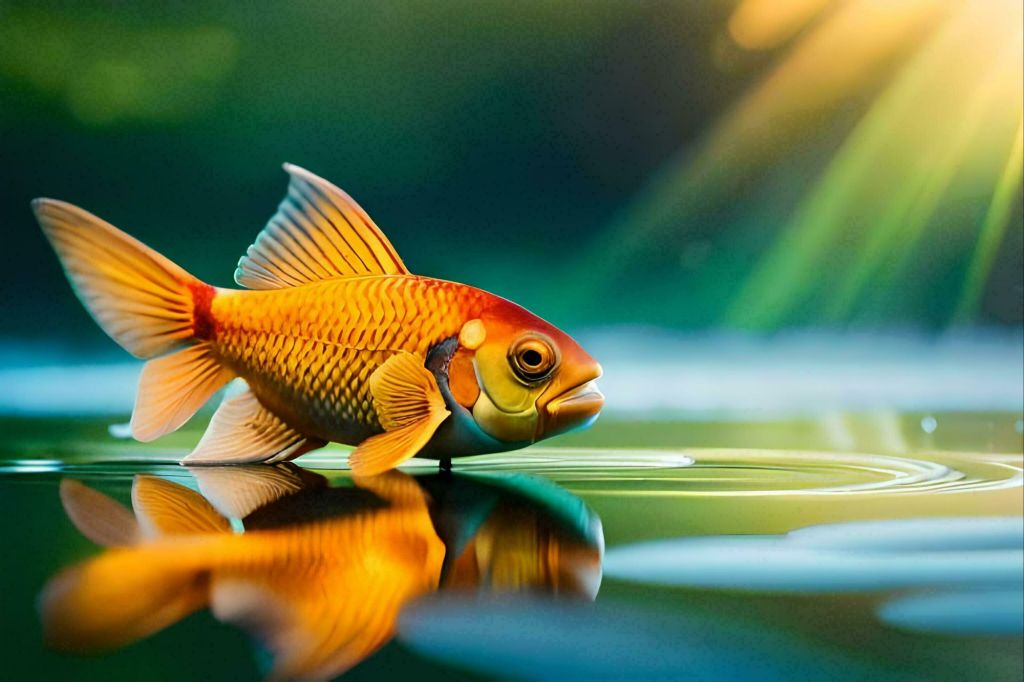
Goldfish are often dismissed as simple creatures with little intelligence, but science tells a different story. These tiny swimmers possess surprising cognitive abilities, from memory retention to problem-solving skills. In fact, with the right techniques, you can train your goldfish to perform tricks, navigate mazes, and even recognize your face.
Ready to unlock the hidden potential of your aquatic companion? Let’s dive into the fascinating world of goldfish training and discover how these “smallest minds” can learn big things.
—
Myth-Busting: Are Goldfish Really Dumb?
A common misconception is that goldfish have a three-second memory. This myth has been debunked by numerous studies showing that goldfish can remember information for months and even associate specific cues with outcomes.
In one study, goldfish were trained to press a lever to receive food. Not only did they learn the task quickly, but they also remembered it weeks later. This level of memory and learning capability demonstrates that goldfish have a level of intelligence comparable to many land-based pets.
Key Cognitive Abilities of Goldfish:
Memory retention: Can remember training cues for months.
Spatial navigation: Capable of learning and remembering complex tank layouts.
Social learning: Can observe and mimic the behavior of other fish.
Sensory perception: Can distinguish between colors, shapes, and even human faces.
—
Why Train Your Goldfish?
Training your goldfish isn’t just a fun party trick—it also provides numerous benefits for the fish and the owner:
Mental stimulation: Engaging a goldfish in training keeps its mind active, reducing boredom and stress.
Physical exercise: Many tricks require movement, promoting better health and longevity.
Bonding: Training helps build a stronger connection between you and your pet.
Now that you know why you should train your goldfish, let’s explore how to do it.
—
Step-by-Step Goldfish Training Guide
1. Create the Right Environment
Before you begin training, ensure your goldfish is in a comfortable and stimulating environment:
Tank size: A larger tank (at least 20 gallons) gives your fish ample space to move and explore.
Water quality: Keep the water clean and at the right temperature (68–74°F).
Enrichment: Add plants, rocks, and decorations to create a stimulating habitat.
A healthy, happy fish is much more likely to respond positively to training.
—
2. Choose the Right Reward
Goldfish are highly food-motivated, making treats an effective reward.
Use small, nutritious treats such as freeze-dried bloodworms or commercial goldfish pellets.
Avoid overfeeding; limit training sessions to a few minutes per day to prevent overeating.
—
3. Introduce a Training Cue
Training relies on associating a specific cue with a desired behavior. Common cues include:
Visual cues: Use a brightly colored stick or finger to guide the fish.
Auditory cues: Tap gently on the tank or use a soft clicker sound.
—
4. Teach Simple Tricks
Start with easy tricks before moving on to more complex behaviors.
a. Follow the Finger
This is a simple trick to get your fish to follow your finger around the tank.
1. Place your finger near the glass.
2. Move it slowly, encouraging the fish to follow.
3. Reward the fish with a treat when it follows your finger.
b. Swim Through a Hoop
Once your fish masters following your finger, you can teach it to swim through a hoop.
1. Hold a small hoop in the water.
2. Use your finger or a stick to guide the fish through the hoop.
3. Reward it once it swims through.
c. Touch a Target
This trick involves teaching your fish to touch a target, such as a colored ball.
1. Introduce the target and place it near the fish.
2. Wait for the fish to approach and touch it.
3. Reward immediately.
—
5. Be Patient and Consistent
Goldfish, like all animals, learn at their own pace. Some may grasp concepts quickly, while others need more time.
Consistency: Train at the same time each day to establish a routine.
Repetition: Repeat the training steps until the fish understands the cue and behavior.
Positive reinforcement: Always reward good behavior and avoid punishing mistakes.
—
Advanced Tricks for the Ambitious Goldfish
Once your goldfish masters the basics, you can challenge it with more complex tasks:
Maze navigation: Create a simple maze using tank dividers and train your fish to find its way through.
Object recognition: Teach your fish to distinguish between different colored objects.
Obstacle course: Set up a mini obstacle course with tunnels, hoops, and ramps.
—
Can Goldfish Recognize You?
Yes! Research shows that goldfish can distinguish between human faces and recognize their owners. Over time, your fish may swim to the front of the tank when it sees you, anticipating food or interaction. This recognition is another testament to their cognitive abilities and emotional intelligence.
—
Conclusion: Small Minds, Big Potential
Goldfish may have small brains, but they are far from simple. With patience, consistency, and the right techniques, you can train your goldfish to perform a variety of tricks and tasks, enriching its life and strengthening your bond.
So, the next time you watch your goldfish swim, remember: behind those shimmering scales is a mind capable of learning, remembering, and even recognizing you. Science’s smallest minds have more potential than we ever imagined—just waiting to be unlocked.
 Glass Cabbage